Have you ever looked at the sky and wondered if you should grab an umbrella? Or maybe you saw a dark cloud and felt a little worried? That is where the National Weather Service comes in to save the day! This group of experts works around the clock to watch the skies for us. They are part of the United States government, but their main job is very simple: keeping people safe. From sunny days to big storms, they provide the data we need to plan our lives.
The National Weather Service uses some of the coolest technology on the planet. They have satellites in space and big stations on the ground. This helps them see a storm before it even gets to your town. In this article, we will talk about how they help us every single day. We will look at their tools, their warnings, and even some of the changes happening to their team right now. Let’s dive in and learn about the people who know exactly what the clouds are up to!
How the National Weather Service Radar Works
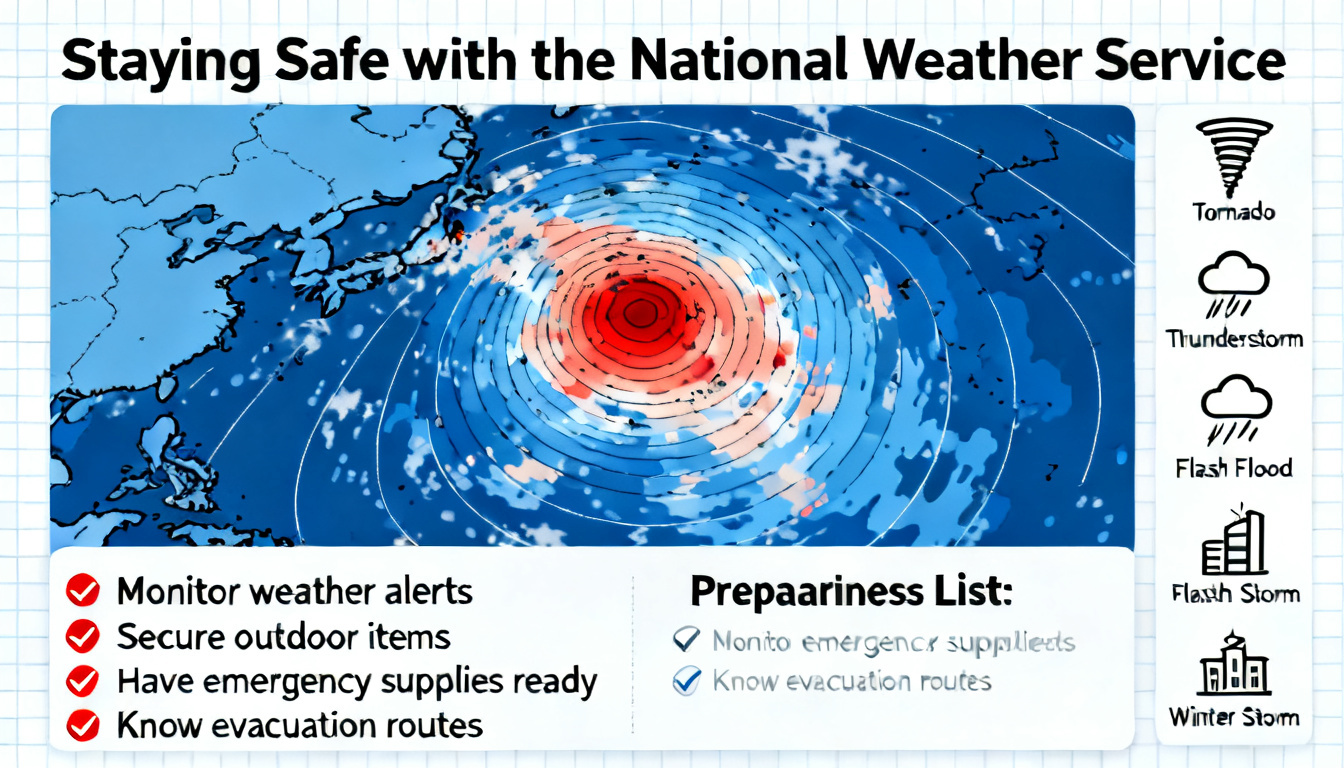
One of the most important tools used today is the National Weather Service radar. You might have seen it on TV or a phone app. It looks like a giant, colorful map with green, yellow, and red blobs. But what is it really? Radar stands for “Radio Detection and Ranging.” The National Weather Service radar stations send out invisible energy waves. These waves bounce off things in the sky, like raindrops or snowflakes.
When the energy hits a raindrop, it bounces back to the station. A smart computer then calculates how far away the rain is and how fast it is moving. The National Weather Service radar can even tell us if a storm is rotating, which is how they spot tornadoes! It is like having a giant X-ray machine for the atmosphere. Because of this technology, we can see exactly when the rain will start at our front door. It is truly a life-saving tool that works 24 hours a day.
Understanding a National Weather Service Winter Warning
When the weather gets cold, things can get dangerous very quickly. You might hear about a National Weather Service winter warning on the radio or see a notification on your phone. It is very important to know what this means! A warning is a serious message. It means that dangerous winter weather is happening right now or will start very soon. This could be heavy snow, ice, or very strong winds that make it hard to see.
If you see a National Weather Service winter warning, it is time to take action. This isn’t just a “maybe” situation. It means the roads might get slippery, and it could be unsafe to drive. The National Weather Service issues these alerts to make sure you stay warm and safe inside. They want you to have extra blankets, food, and water ready. While a “Watch” means a storm might happen, a “Warning” means the storm is here, so stay alert!
Important News About National Weather Service Cuts
Lately, there has been a lot of talk in the news about National Weather Service cuts. Some people in the government want to spend less money on weather programs. These National Weather Service cuts can be a big deal because they might affect how many people are working to watch the storms. When there is less money, it can be harder to fix old equipment or hire new scientists.
Many experts are worried about these National Weather Service cuts. They believe that having a strong team is the only way to give accurate warnings. If the National Weather Service has fewer resources, it might take longer to tell people about a coming storm. However, the team is still working as hard as they can to provide the best data possible. Staying informed about these changes helps us understand why supporting our local weather experts is so important for our safety.
Why We Need the National Weather Service Every Day
The National Weather Service is more than just a website or a voice on the radio. It is a massive network of people who love science and care about their neighbors. Every single day, the National Weather Service helps pilots fly planes safely and helps farmers know when to plant their crops. They even help ship captains navigate the big oceans. Without them, our world would be a much more confusing and dangerous place to live.
Think about your morning routine. You probably check the temperature before picking out your clothes. That information comes from the National Weather Service. They gather millions of pieces of data every hour. This data goes into giant computers that help predict the future. The National Weather Service is a silent hero that makes sure we are never caught off guard by a sudden change in the atmosphere.
The History of the National Weather Service
Did you know that the National Weather Service has been around for a very long time? It started way back in the year 1870. Back then, it was actually part of the Army! People realized that knowing the weather was important for the military and for businesses. Eventually, it became a civilian agency because everyone needed to know if a storm was coming. The National Weather Service has grown from using simple thermometers to using high-tech satellites.
Over the years, the National Weather Service has saved thousands of lives. They have improved their methods so much that they can now predict storms days in advance. In the old days, a storm might arrive as a total surprise! Today, thanks to the National Weather Service, we have plenty of time to prepare. Their history is a story of humans getting smarter and using better tools to understand the world around us.
How the National Weather Service Collects Data
To give us a good forecast, the National Weather Service has to be like a detective. They collect “clues” from all over the country. They use weather balloons that fly high into the sky to measure how cold or windy it is up there. They also have sensors in the ocean and on top of mountains. All this info goes back to the National Weather Service headquarters to be analyzed.
The National Weather Service also listens to “Weather Spotters.” These are regular people who are trained to report what they see on the ground. If a spotter sees a wall of clouds or hail, they tell the National Weather Service immediately. This human touch helps confirm what the computers are seeing on the National Weather Service radar. It is a team effort between machines and people to get the story right.
Stay Safe With National Weather Service Alerts
Safety is the number one goal of the National Weather Service. They have a special system for sending out alerts. You might have a “Weather Radio” at home that wakes you up if there is a big storm. This is because the National Weather Service wants to make sure you hear the news even if the power goes out. Their alerts are divided into levels so you know how serious the situation is.
| Alert Level | Meaning | What to Do |
| Advisory | Nuisance weather is coming. | Be careful and stay aware. |
| Watch | A storm is possible. | Make a plan and check the news. |
| Warning | Dangerous weather is here. | Take cover and stay safe! |
By following these alerts from the National Weather Service, you can keep your family out of harm’s way. It is always better to be prepared and safe than to be surprised by a big storm!
The Technology Behind the National Weather Service
The National Weather Service uses some of the fastest supercomputers in the world. These computers take all the data from the National Weather Service radar and satellites to create a “model.” A model is like a digital version of the Earth’s atmosphere. By playing with this digital version, the National Weather Service can see where a storm might go next.
It is almost like a video game, but with real-life consequences! These models are getting better every year. This is why the National Weather Service can tell us about a heatwave or a blizzard a week before it happens. This high-tech approach is what makes the National Weather Service a world leader in meteorology. Even with the National Weather Service cuts, the scientists there continue to push the limits of what technology can do.
Comparing Weather Apps to the National Weather Service
You might have a favorite weather app on your phone. But did you know that most of those apps get their data from the National Weather Service? While the apps look pretty, the National Weather Service is the original source of the information. They are the ones doing the hard work of measuring the wind and watching the National Weather Service radar images.
The National Weather Service is a “people-first” agency. They don’t try to sell you anything or show you ads. Their only job is to provide the facts. That is why many people trust the National Weather Service more than any other source. When the weather gets really scary, going straight to the source is the best way to get the most accurate and timely information for your area.
Conclusion
In the end, the National Weather Service is a vital part of our daily lives. Whether they are tracking a hurricane or just telling us it will be a sunny day for a picnic, they are always there. Despite news of National Weather Service cuts, the dedication of their team remains strong. They use tools like the National Weather Service radar and issue every National Weather Service winter warning with our safety in mind.
Next time you hear a weather report, take a second to think about the hard work that went into it. Stay safe, stay informed, and always keep an eye on those alerts! What is the weather like in your town today? Leave a comment and let us know how you prepare for a big storm!
(FAQs)
- What is the National Weather Service?
The National Weather Service is a government agency that provides weather forecasts and safety warnings for the United States. They help people stay safe from storms, floods, and extreme heat.
- How can I see the National Weather Service radar?
You can see the National Weather Service radar by visiting their official website or using a weather app that uses their data. It shows you where rain and snow are currently falling.
- What should I do during a National Weather Service winter warning?
During a National Weather Service winter warning, you should stay inside if possible. Make sure you have supplies like food and flashlights, and avoid driving on icy roads.
- Why are there National Weather Service cuts happening?
There are National Weather Service cuts because of changes in government spending. This means there might be less money for staff and new technology in the future.
- Is the National Weather Service free to use?
Yes! The information from the National Weather Service is paid for by taxes, so it is free for everyone to access on their website and through public alerts.
- Can the National Weather Service predict tornadoes?
Yes, by using the National Weather Service radar, experts can see the rotation in clouds that often leads to a tornado, allowing them to issue life-saving warnings.